
How Less Rain, Diesel Shortage and Harsh Weather Are Affecting Kala Namak Rice Cultivation
Across Siddharthnagar and eastern Uttar Pradesh, changing weather conditions are quietly reshaping how traditional Kala Namak rice is cultivated.
Low rainfall, rising temperatures and irrigation stress are beginning to affect even the earliest stages of farming.
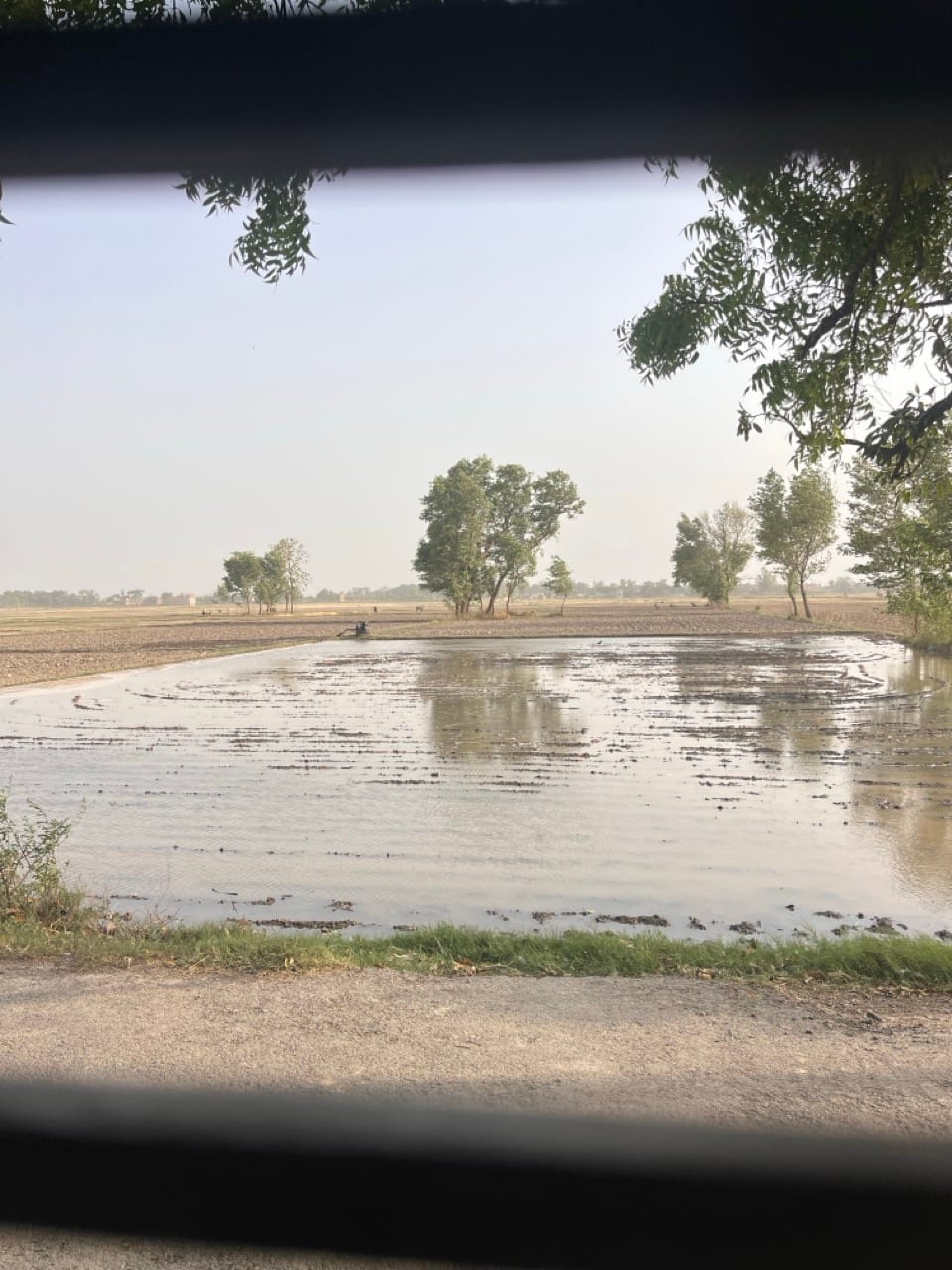
First irrigation before Kala Namak sowing in Siddharthnagar — cooling the soil after weeks of heat and preparing the land for native long-duration rice cultivation.
For people searching online for “Kala Namak rice price”, “original Kala Namak rice” or “GI tagged Kala Namak rice”, the grain often appears like a finished premium product.
But very few people see what happens before the seed even enters the soil.
This year in Siddharthnagar and the surrounding Dumariyaganj belt, the beginning of the Kala Namak rice season has already become difficult.
Low rainfall, rising temperatures, irregular weather patterns and diesel availability issues are slowly changing how traditional rice farming works in eastern Uttar Pradesh.
And for native long-duration varieties like Kala Namak rice, these conditions matter deeply.
First Irrigation Before Sowing
Traditionally, the arrival of monsoon moisture helped naturally cool the fields before paddy sowing.
But this year, many farmers in the region are being forced to irrigate early using diesel-powered pumps simply to reduce soil temperature and prepare nursery beds.
This first irrigation is not only about water.
It is about protecting the biological rhythm of the crop.
Kala Namak rice is not a fast-growing hybrid.
It is a slow-grown native variety traditionally cultivated in wetland-linked soils across Siddharthnagar, Maharajganj and nearby eastern UP regions.
Its aroma, texture and character depend heavily on environmental balance.
Why Weather Matters More for Kala Namak Rice
Unlike commercial short-duration paddy varieties, traditional Kala Namak rice takes nearly 160–180 days to mature.
That means the crop remains exposed to changing weather conditions for a much longer time.
Irregular rainfall patterns can affect:
- Nursery establishment
- Root development
- Soil cooling
- Water retention
- Aroma development
- Grain filling stage
- Pest pressure and fungal stress
Excessive heat during early growth stages can weaken seedlings.
Late rainfall can disturb transplanting cycles.
Sudden heavy rain after dry periods can also damage delicate field balance.
Farmers growing native Kala Namak rice often depend on observation, local ecological understanding and experience rather than intensive chemical intervention.
That is why climate instability affects traditional farming more visibly.
Diesel Availability Is Becoming a Serious Rural Farming Issue
In many villages, irrigation still depends heavily on diesel engines.
When diesel becomes expensive, unavailable or delayed during peak sowing periods, farmers are forced into difficult choices:
- Delay irrigation
- Reduce cultivation area
- Shift toward hybrid crops
- Lower investment in traditional varieties
For long-duration native rice varieties, delayed irrigation during early stages can affect the entire season.
This is one of the reasons authentic Kala Namak rice remains limited in production despite increasing demand across India.
People often search:
- Kala Namak rice price per kg
- Original Kala Namak rice online
- Kala Namak rice benefits
- GI tagged Kala Namak rice
- Best Kala Namak rice brand
But the real story begins much earlier — in uncertain weather, water management and patient cultivation.
The Difference Between Native and Hybrid Kala Namak Rice
Today, many farmers are under pressure to shift toward faster and higher-yielding crops.
Traditional Kala Namak rice produces lower yield compared to many commercial hybrid varieties.
It also requires:
- Longer cultivation time
- More field supervision
- Better water rhythm
- Greater patience from the farmer
This is why preserving original Kala Namak rice is not only an agricultural issue — it is also cultural and ecological.
The grain survives because some farmers still believe slow cultivation has value.
Wetlands, Soil and Traditional Rice
Kala Namak rice has historically grown around wetland-linked landscapes of eastern Uttar Pradesh.
The Gauri–Rapti floodplain region around Siddharthnagar still supports seasonal water recharge, fertile alluvial soils and biodiversity linked to traditional agriculture.
In many fields, Sarus cranes, migratory birds and native aquatic ecosystems still coexist beside paddy cultivation.
This ecological relationship is part of what gives traditional Kala Namak rice its distinct identity.
The grain cannot be separated entirely from the landscape that shaped it.
Why Production May Become More Limited in Coming Years
If irregular rainfall and input stress continue, authentic Kala Namak rice cultivation may become even more limited.
Many younger farmers naturally move toward crops with:
- Faster harvest cycles
- Lower risk
- Easier irrigation management
- Better short-term profitability
Traditional rice survives only when farmers feel there is long-term value in preserving it.
That is why direct farmer support, fair pricing and awareness about original Kala Namak rice matter more today than ever before.
Healing Grain and Slow Cultivation
At Healing Grain, we work around small-batch Kala Namak rice cultivation rooted in Siddharthnagar.
Our effort is not based on volume farming.
We are trying to document the real landscape around the grain — the wetlands, the changing weather, the irrigation cycles, the uncertainty and the patience required before harvest ever arrives.
Because authenticity does not begin at packaging.
It begins quietly in the field.
Related Reads
→
Everything About Kala Namak Rice →